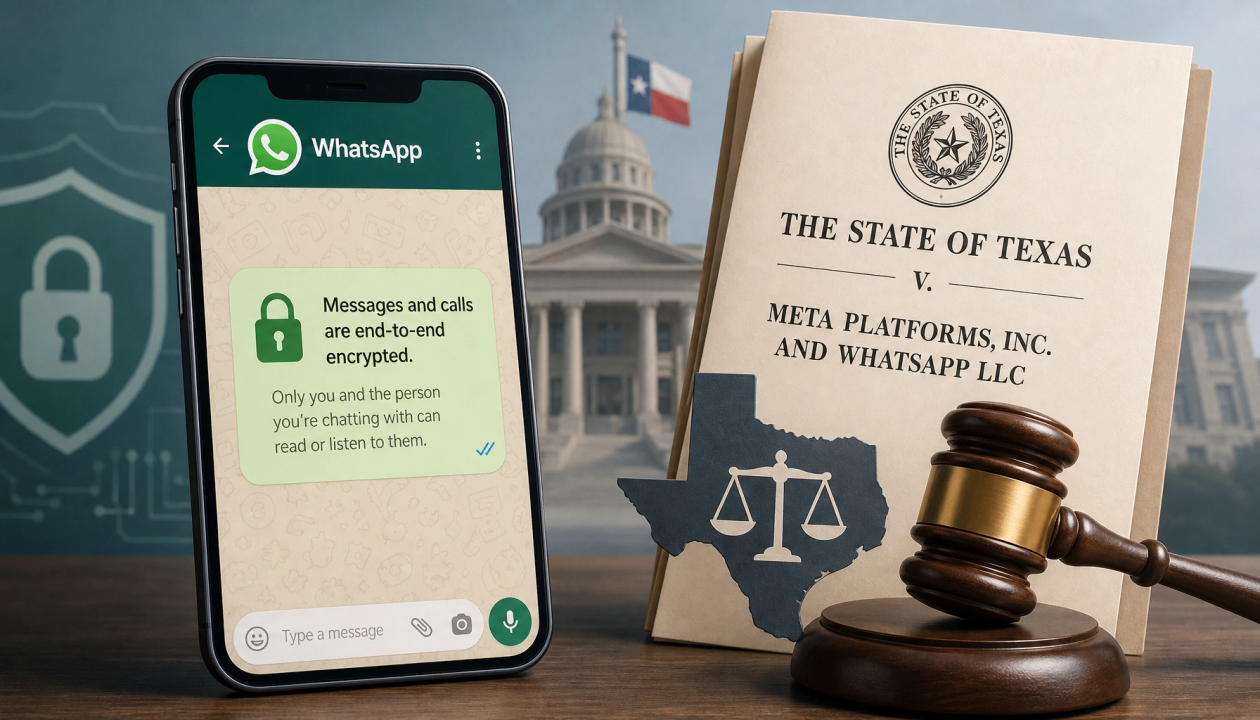
Texas Attorney General Ken Paxton has filed a lawsuit against Meta Platforms and WhatsApp, accusing the company of misleading Texans about how private its messaging app really is. The case centers on WhatsApp’s end-to-end encryption claims and the promise that message contents are accessible only to the sender and recipient.
Paxton’s complaint targets WhatsApp’s encryption messaging
The Texas filing says WhatsApp overstated the strength and scope of its privacy protections and presented encrypted messages as if they were fully private from the platform itself. Paxton’s office is bringing the case under Texas consumer protection law over that alleged false impression about access to user communications.
WhatsApp has long been marketed as a secure messaging service built around end-to-end encryption. In practical terms, that claim tells users their message contents are not available to the platform. Texas says those assurances misled consumers by presenting WhatsApp messages as encrypted in a way that kept them out of reach.
The privacy assurances at the center of the case
The complaint goes after the consumer-facing promise behind the app’s privacy messaging. WhatsApp’s security language and its positioning as a private communications tool shaped the expectation that a private chat stays private once it is sent.
According to the Texas filing, that expectation was shaped by WhatsApp’s security language and its public positioning as a private communications tool. The lawsuit argues that the company’s claims about encryption and privacy gave Texans a misleading sense that their conversations were fully shielded from the platform.
Meta’s response and what remains unclear
Meta disputes the allegations, according to the secondary summary. It maintains that WhatsApp cannot access encrypted communications.
Several details are still not visible in the available filing preview, including the full legal claims, the remedies Texas is seeking, and the court venue. The whistleblower reference appears only in the secondary summary and is not independently confirmed.
The case is still at the allegation stage, and the core dispute is whether WhatsApp’s encryption claims overstated the privacy users were actually promised.
Disclaimer: This article was created with the assistance of AI. Images are for illustrative purposes only.
About the author

Samarth Agrawal is an AI and technology professional who writes about WhatsApp, automation, and emerging AI trends. He focuses on simplifying complex tech updates into practical insights for businesses, creators, and everyday users